
A business with a large roof and a daytime electricity bill has four broad ways to pay for solar: buy the system outright, pay for it through asset finance, host a system a funder owns under a power purchase agreement (PPA), or lease the roof. Each one changes who owns the kit, who can claim tax relief and what you’re committing to. For owners, finance directors and estates teams weighing them up, this guide compares the routes, with the conditions that decide which ones are open to you.
We don’t arrange, broker or advise on finance, and nothing here is tax advice — take your own tax advice before committing.
Buying outright: capital allowances
If your business buys the system, the cost can be set against taxable profits through capital allowances. The detail matters, because solar doesn’t follow the same rules as most plant and machinery.
gov.uk lists solar panels in the special rate pool, and HMRC’s capital allowances manual confirms that special rate expenditure doesn’t qualify for full expensing. That leaves three routes to relief:
- Annual Investment Allowance (AIA): deduct the full value of qualifying plant from your profits before tax, up to the £1 million AIA amount — this is the route to 100% first-year relief on solar
- 50% first-year allowance: available on special rate expenditure to companies within the charge to corporation tax
- Special rate pool: writing down allowances at 6% a year on whatever isn’t relieved another way
A few AIA rules are worth knowing before you plan the timing. You can only claim AIA in the period you bought the item. If you spend more than the AIA amount, gov.uk says to claim first-year allowances or writing down allowances on the amount above it. And if two or more limited companies are controlled by the same person, they get one AIA between them.
Capital allowances reduce tax on profits, so they only help an organisation with taxable profits to set them against. Charities and public bodies should check their own position before counting on them.
Why full expensing doesn’t apply to solar
Commercial solar is often marketed with ‘full expensing’. It’s the wrong allowance for solar, which is special-rate plant. Full expensing is a 100% first-year allowance for companies investing in main rate plant and machinery. HMRC’s manual is explicit that special rate expenditure may qualify for the 50% first-year allowance but does not qualify for full expensing. Because solar panels are special rate, 100% first-year relief on solar comes through the AIA instead.
If the whole cost fits within the AIA you have left for the period, the result is 100% first-year relief either way. The difference shows when the AIA has already been used on other spending, or the project is bigger than the limit: the amount above it gets the 50% first-year allowance or writing down allowances, not full expensing. That’s worth modelling before the order is placed.
Hire purchase: ownership, paid in instalments
Hire purchase lets a business pay for a system in instalments and still claim capital allowances. gov.uk explains that if you buy something under a hire purchase contract, when you start using the item you can claim for all the payments you’ll make under the contract — but you can’t claim on the interest payments.
Leasing works differently. Under a finance lease or an operating lease, the leasing company owns the asset, and whether the business using it can claim allowances depends on the type of lease — something to settle with your accountant before you sign.
Asset finance providers typically look for a trading business — limited companies, LLPs and sole traders among them — with usually 2+ years of filed accounts, plus a site survey and design pack for the system. You deal with the provider directly.
Power purchase agreements: no capital outlay, strict conditions
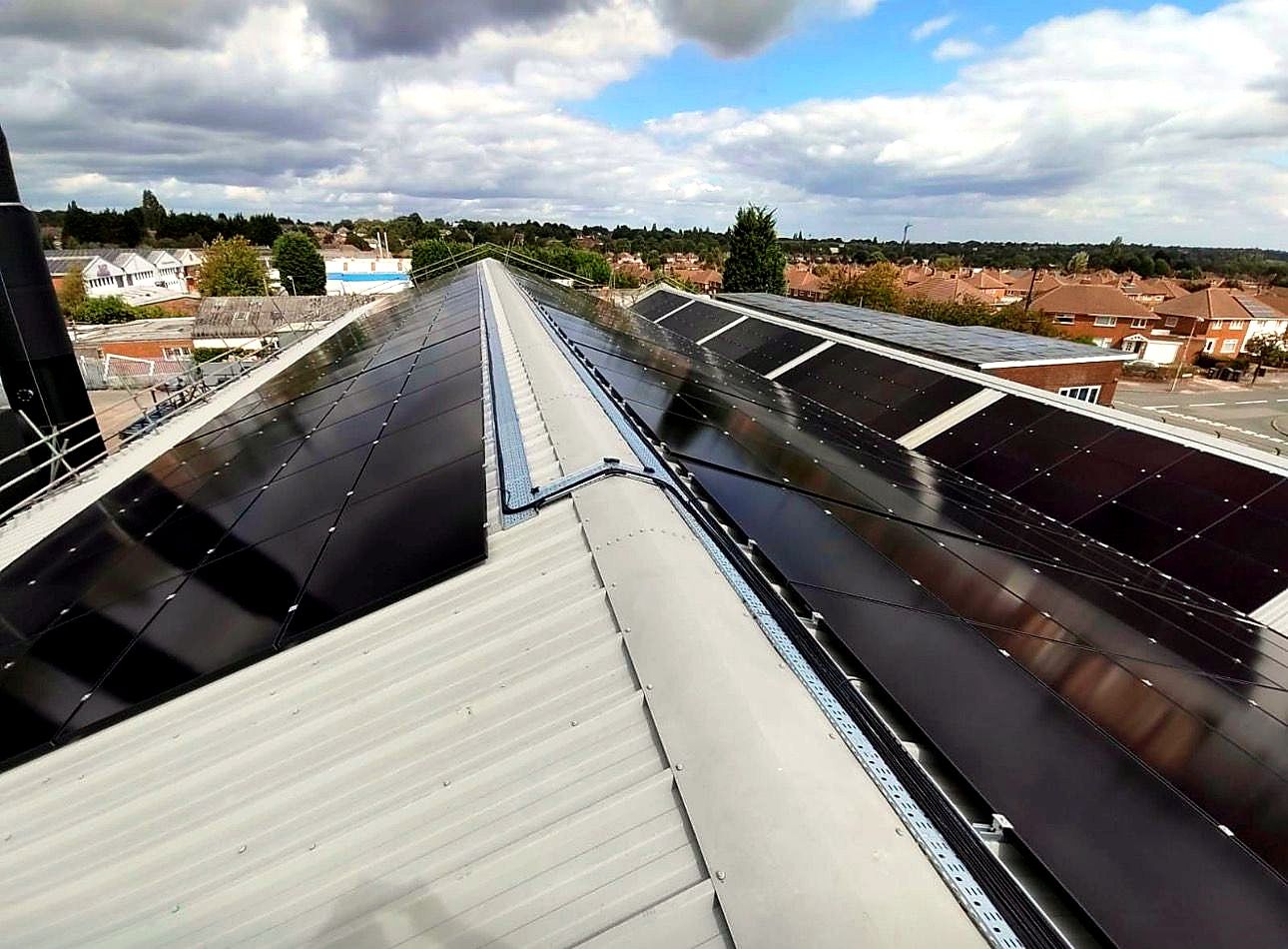
A funder installs, owns and maintains a solar PV system on your roof. You buy the electricity it generates at a fixed, discounted rate for 15–25 years, and at the end of the term the system is gifted to you or removed. There’s no capital outlay and no maintenance responsibility — but the funder carries the investment, so the site has to meet its conditions. The usual conditions are:
- a commercial, industrial, agricultural or public-sector site (PPAs are not normally available to domestic customers)
- suitable roof area — typically 500 m² or more, in good structural condition with 15+ years of remaining life
- minimum annual electricity consumption, commonly 100,000 kWh+, with a strong daytime load profile
- a lease of 20–25 years on the roof, and landlord consent if you don’t own the building
- acceptable covenant strength (filed accounts or a credit check on the off-taker)
- a half-hourly metered supply, which is preferred
Because the funder owns the system, the capital cost sits with the funder, and your business has no solar plant of its own to claim allowances on.
Roof lease: income from roof space
A roof lease, sometimes called rent-a-roof, is a variant of a PPA. The funder pays you to lease your roof and sells the generated electricity directly to the grid, or to you at a discounted rate. It’s best suited to large warehouse, agricultural or industrial roofs, and gives you rental income with no system to operate, plus an option to buy at the end of the term.
The conditions centre on the roof and the grid connection: a large, structurally sound roof facing south, east or west; a long lease available (20–25 years); planning permission obtainable, since most commercial roofs are permitted development; and DNO connection capacity available.
How the routes compare
Buying outright or on hire purchase means your business claims the capital allowances and ends up owning the system. A PPA removes the capital cost but commits you to a long agreement, and it needs a site that meets the funder’s conditions. A roof lease turns roof space into rental income, with the electricity sold to the grid or to you at a discount. Which one fits depends on your tax position, your cash, your lease and how your site uses power — a decision for you and your advisers.
Start with your load profile
Whichever route you’re weighing up, the numbers start with how your site uses electricity. That’s why we ask for data first:
Send us your roof plan or half-hourly data. We’ll model generation against your actual load profile and come back with capacity, cost, payback and the funding routes available.
That matters most for a PPA, where a strong daytime load is one of the conditions, but it shapes every option: the more of your generation you use on site, the less electricity you buy from the grid.
Our commercial work includes live, operational sites such as Compass House in Gloucester — 193 kW across five separate roof aspects on a 24/7 public-sector site, one of our commercial solar panels in Bristol and Gloucestershire installs. For Tan Sales in London, we installed 320 kW across 770 panels on one standing-seam factory roof, delivering the rooftop mounting and the full electrical installation, including a SolarEdge rapid-shutdown system.
Talk to us about your site
See our commercial solar, industrial PV and commercial battery storage pages, review each scheme and its conditions on our grants and funding page, or get in touch with your roof plan and half-hourly data. Scheme details are correct at the time of writing and change frequently. We don’t arrange, broker or advise on finance — take your own tax advice before committing.