
The charger on your wall can do far more than refill your electric car. A smart home charger talks to your tariff, your solar and your battery to make every mile as cheap and clean as possible — on a time-of-use tariff, a typical EV costs around 2p per mile to charge at a 7p/kWh overnight rate. Set up badly, though, a charger can empty your home battery into the car on a dull afternoon. For EV drivers charging at home, this covers how smart charging works and the settings that matter.
What makes a charger ‘smart’
Home and workplace charge points sold in Great Britain have had to meet the Electric Vehicles (Smart Charge Points) Regulations 2021 since they came into force on 30 June 2022. gov.uk’s guidance says the aim is to let cars charge when there’s less demand on the grid, or when more renewable electricity is available. Among other requirements, a charge point covered by the rules must:
- be able to send and receive information, and respond to signals to change the rate or time of charging
- keep its smart functions if you switch electricity supplier
- carry on charging if it loses its connection to a communications network
- come with pre-set, off-peak default charging hours, which you can accept, remove or change
- allow for a randomised delay function
- measure the electricity used and how long charging lasts, with that information visible to you
The regulations don’t apply to charge points sold before 30 June 2022, so an older charger may not have all of these features. The ability to switch supplier without losing smart functions matters more than it sounds: tariffs change, and the charger should keep up.
Charging in the cheap window
Pair a smart charger with a time-of-use tariff and a typical EV costs around 2p per mile to charge at a 7p/kWh overnight rate. The charger schedules itself automatically inside the cheap window, so the car is ready by morning without anyone setting an alarm.
That figure depends on two things — the price of your cheap-rate electricity and how efficient your car is. Pence per mile is the price you pay per kWh divided by the miles your car covers on each kWh, so run that sum with your own tariff and car before relying on it.
Some tariffs manage the scheduling for you. On Intelligent Octopus Go, you tell Octopus when you need the car and how much charge you need, and it charges your car when energy is expected to be cheaper — with up to six hours of off-peak electricity for the whole home between 11:30pm and 5:30am. It needs a compatible car or charger, and Octopus notes that compatibility can change. Rates vary by region and over time, so check the current price before you do the sums.
One detail worth checking on commissioning day: the off-peak default hours a new charger comes with are there to meet the regulations — they aren’t matched to your tariff. If your supplier’s cheap window runs at different times, the charger’s schedule should be changed to match it — the rules allow you to accept, remove or change those defaults.
Solar-aware ‘eco’ charging
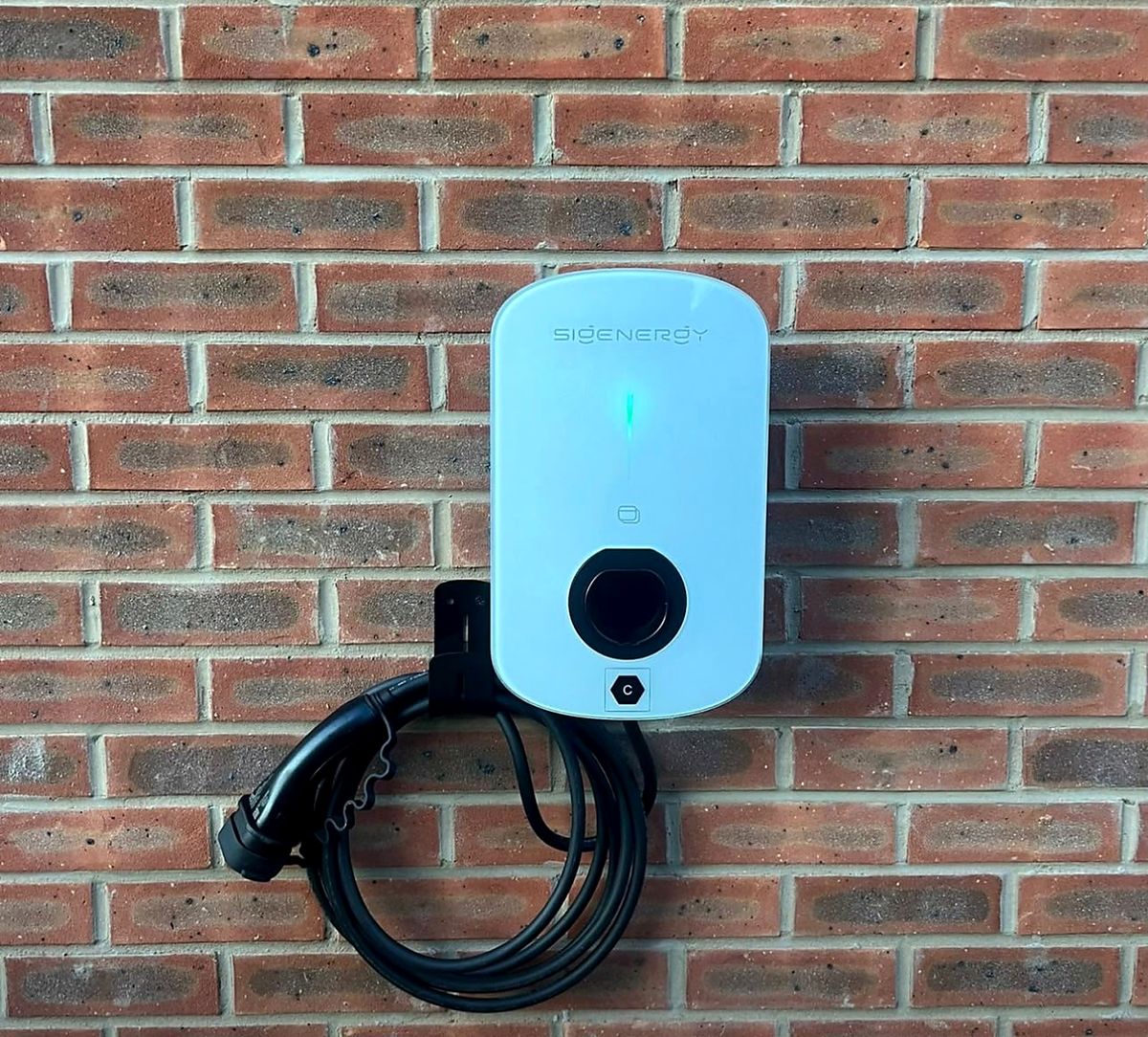
Daytime is where solar comes in. Solar-diverting chargers can route surplus solar into your car — so daytime charging runs on your own generation rather than power from the grid or your battery. On our London install, a Sigenergy EV charger was commissioned with the home’s solar for exactly this.
It works best when the car is at home and plugged in while the sun is up. A car that’s out at work all day will do most of its charging overnight instead, and on a short winter day there may be little surplus to divert at all — which is where the cheap window takes over. On a fully integrated system, the day runs in a clear order:
- Daytime: solar powers the house first, then the battery, then the EV
- Evening peak: the battery powers the house
- Overnight: cheap-rate electricity fills the battery and charges the car

‘Blinding’ the charger from your battery
This is the setting most people don’t know to ask about:
If you don’t want the car draining the home battery on a dull day, we can ‘blind’ the charger so it only sees solar + grid — never the battery. That keeps the battery for your home loads (and the cheap evening peak) instead of dumping it into a car you’ll re-charge overnight anyway.
The reasoning holds up. A home battery usually holds far less than a car’s battery pack, and the car is going to charge at the cheap overnight rate regardless. The energy in your home battery does the most good when it runs the house through the evening peak — not when it moves into the car in the afternoon, leaving the house to buy peak-rate electricity later.
How it’s done depends on the equipment. It comes down to how the charger and the battery system measure power, and how each one is configured when the system is commissioned. It’s best settled on installation day rather than untangled afterwards.
Two installs, two set-ups
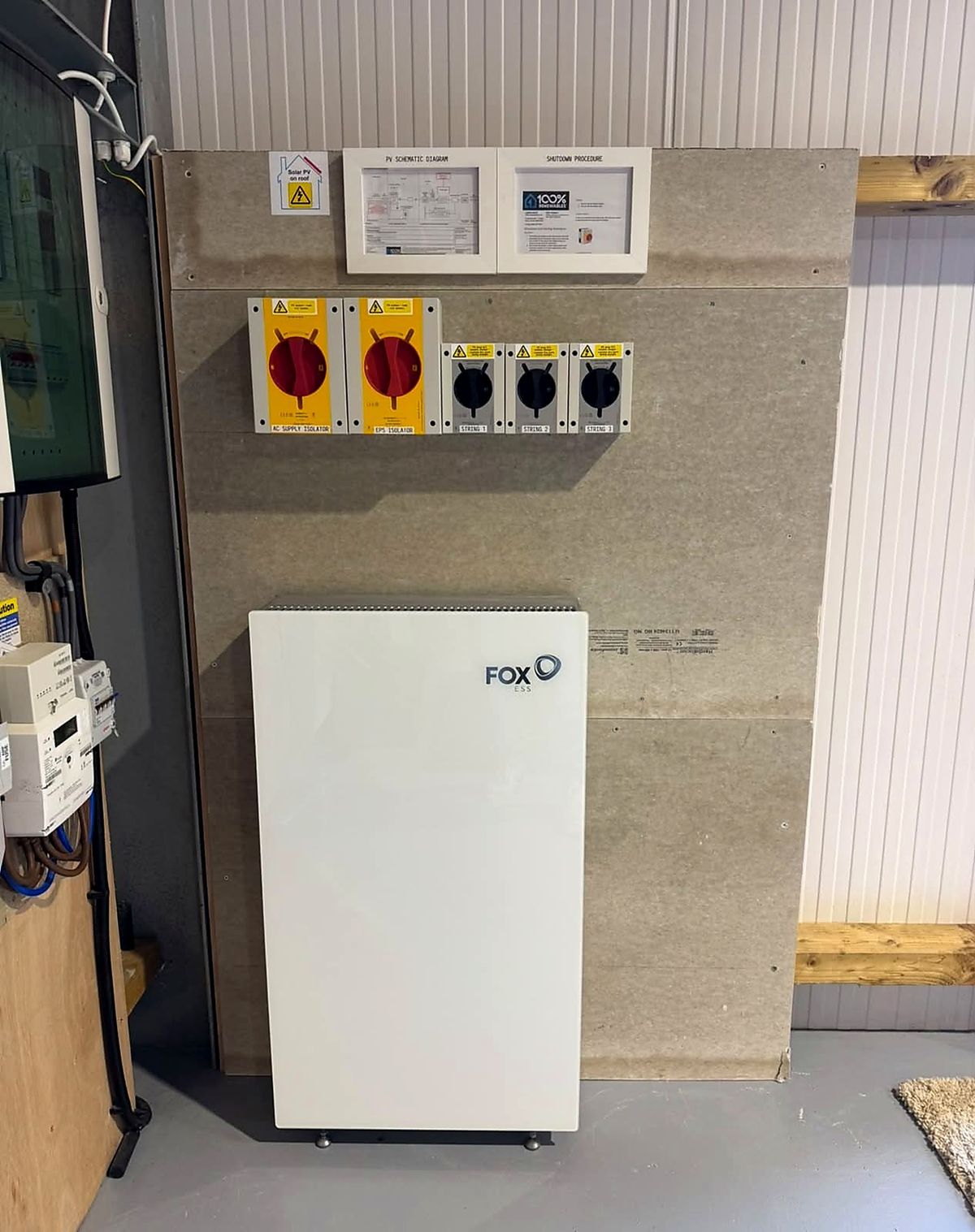
At Haywood Village in Weston-super-Mare, one install covered an all-black solar array, a Fox ESS hybrid inverter and battery, and a wall-mounted 7 kW EV charger beside the meter cabinets. In London, we installed a Sigenergy EV charger alongside a Sigenergy battery configured for whole-home backup, integrated with the homeowner’s solar, with the self-consumption charging logic commissioned on site. Designing the charger, battery and solar as one system means these decisions are made at the start, not after the first surprise. Our solar panel installation page covers the panel side of that design, and the solar panels in Somerset page has the Haywood Village job alongside our other installs near Weston-super-Mare.
A note on VAT
Solar panels and batteries on a home installation are zero-rated for VAT until 31 March 2027, but EV chargers aren’t on HMRC’s list of energy-saving materials. A charger doesn’t get the zero rate, even when it’s fitted alongside panels or a battery. Our guide to 0% VAT explains what the relief does cover.
Getting the charger set up right
See our EV charging page for solar-aware charging, tethered or socketed chargers and app scheduling, or battery storage if you’re adding storage at the same time. For more on tariffs, read time-of-use tariffs and home batteries. When you’re ready, book a site survey. Tariff prices and supplier conditions change, so check current terms before you plan around them.