
Few homes have a roof that faces due south at the ideal pitch with nothing overhead. If yours faces east and west, or has a chimney, dormer or neighbour’s tree casting shadows across it, solar can still work — the design just has to allow for it. An east/west roof typically produces around 80–85% of the annual yield of a south-facing one. This post covers orientation, shade and panel-level electronics, plus the details that keep a system producing year after year.
South is best — but east/west still works
The short version:
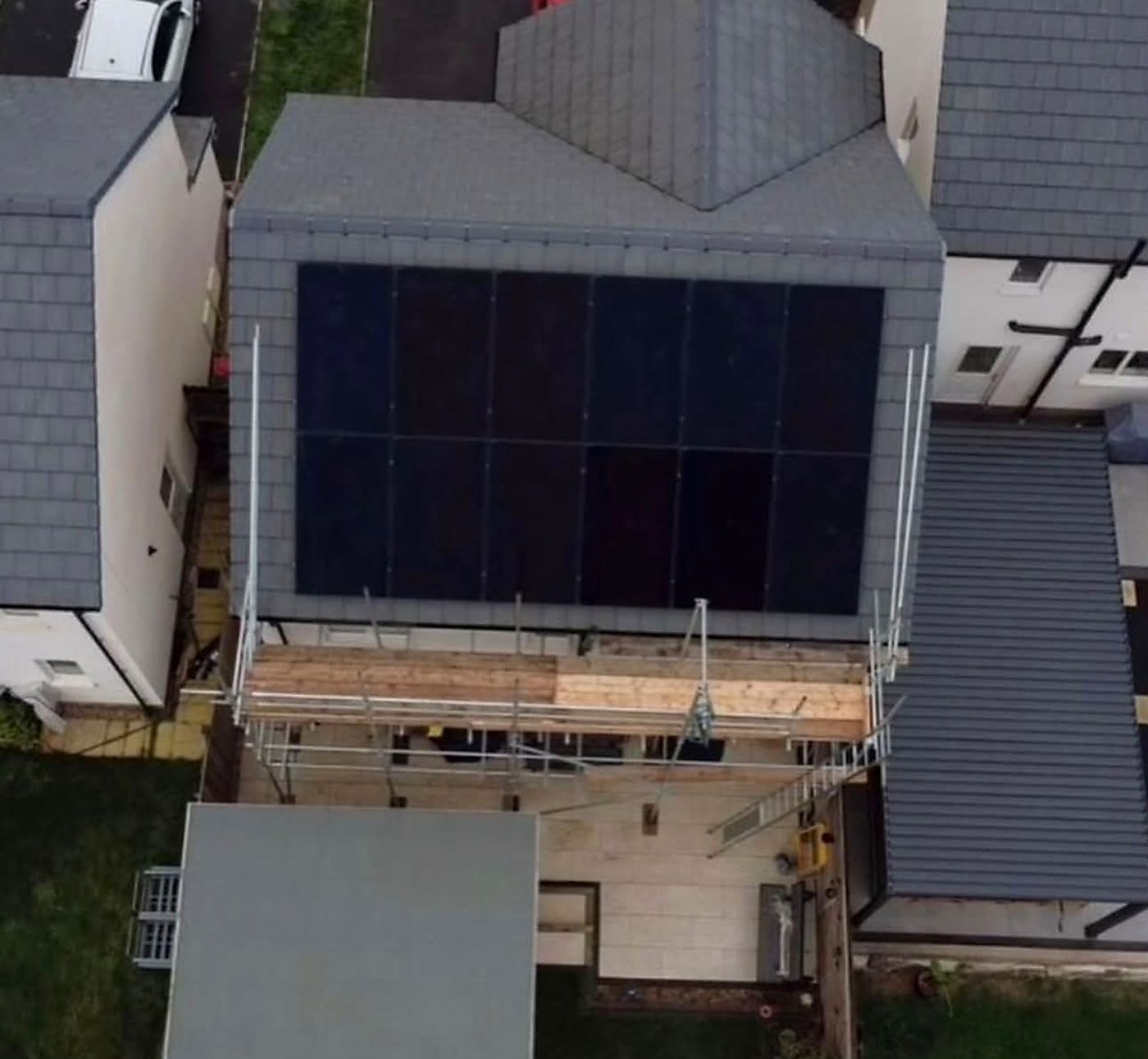
A south-facing roof at roughly 30–40° gives the highest annual yield in the UK. East/west roofs typically produce around 80–85% as much, and spread generation across morning and evening — which actually pairs really well with how most households use power.
The Energy Saving Trust gives a matching figure: a system facing east or west tends to get around 15–20% less energy than one facing directly south. It also says it doesn’t recommend installing panels on a north-facing roof.
The shape of the day matters as much as the annual total. An east face catches the morning and a west face the late afternoon, so an east/west layout generates across more of the day, and more of that generation lines up with when a household is up and using power. Add a battery and the evening is covered too.
You can explore this for your own location with PVGIS, the European Commission’s free tool that estimates solar radiation and photovoltaic system performance for any location, and lets you compare different system configurations. Our savings calculator also lets you set your roof’s direction and shading.
Why one shaded panel matters
On a standard ‘string’ system, one shaded panel can drag down the whole row. The panels in a string are connected in series, so the shadow from a chimney, an aerial or a tree can hold back more than the single panel it falls on.
The Energy Saving Trust lists nearby buildings, trees and chimneys as things that can shade a roof and have a negative impact on performance. Shadows also move with the time of day and the seasons, so a roof that looks clear at midday in June can tell a different story on a winter afternoon. That’s why our systems are designed around your roof, shading and usage rather than a standard layout.
Optimisers and microinverters
Microinverters and DC optimisers let every panel work independently, so chimneys, dormers, trees or aerials don’t kill your output. SolarEdge and Tigo both make DC optimisers. Tigo, for instance, says its TS4-A-O can increase energy production with shaded and mismatched modules, and allows designs with unequal string lengths or mixed orientations.
They earn their place on:
- complex roofs
- roofs with multiple orientations
- roofs with partial shade
There’s a bonus, too: panel-level monitoring, so you can see exactly which panel is doing what.
What optimisers won’t do is add generation to a roof that isn’t shaded. The Energy Saving Trust is direct about this: if your roof doesn’t have shading, optimisers won’t help you generate more electricity, although they do give you extra opportunities to monitor your system’s performance. On a clear, single-aspect roof, they’re a choice about monitoring and safety features rather than yield — and it’s a fair question to ask of any quote that includes them.
Rapid shutdown: making the roof safe to work on
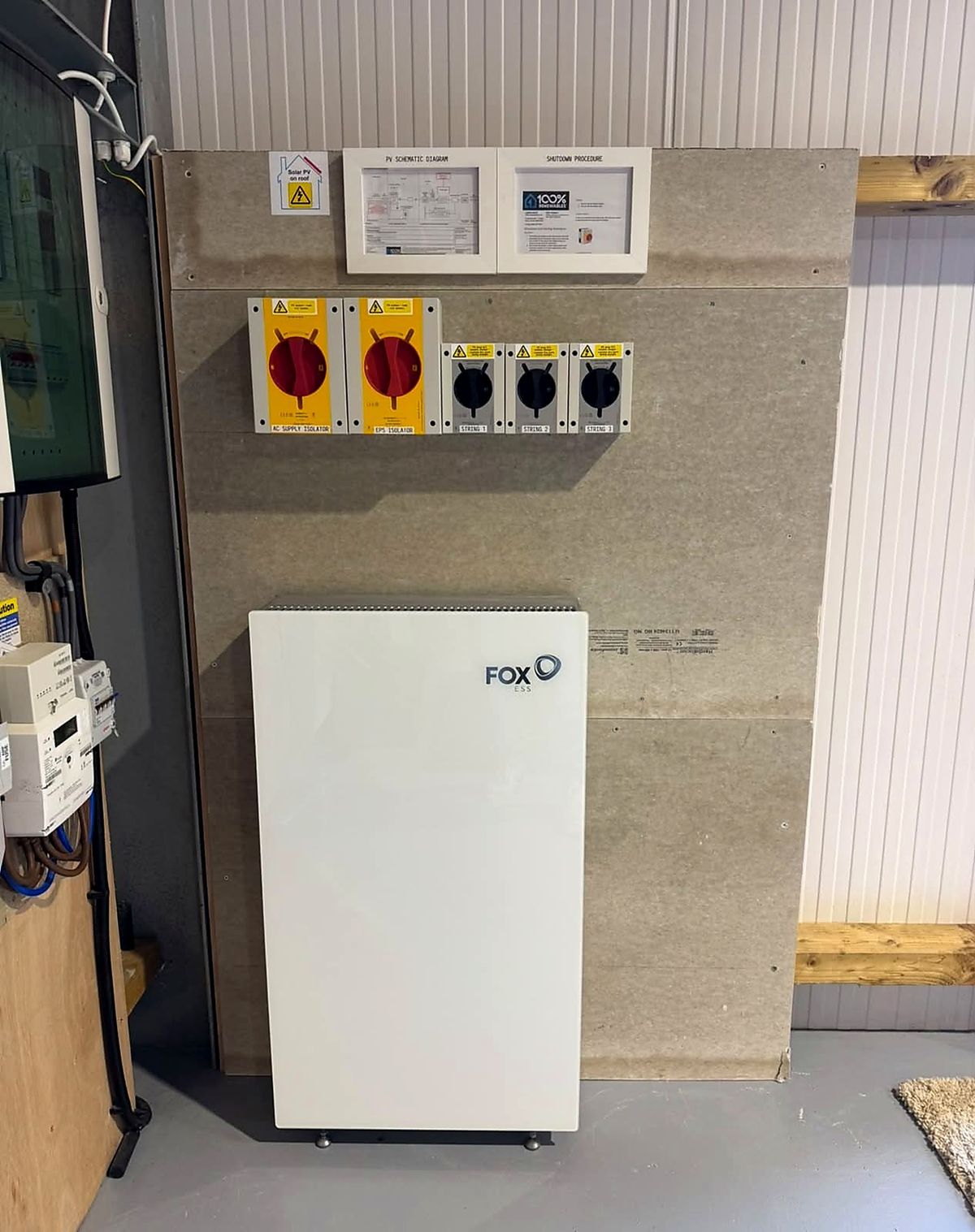
Panels generate whenever there’s daylight, so the DC cabling on a roof can stay live even when the rest of the system is switched off. Rapid shutdown drops the DC voltage on the roof to a safe level at the push of a button — essential for firefighter safety, and increasingly expected on commercial installs.
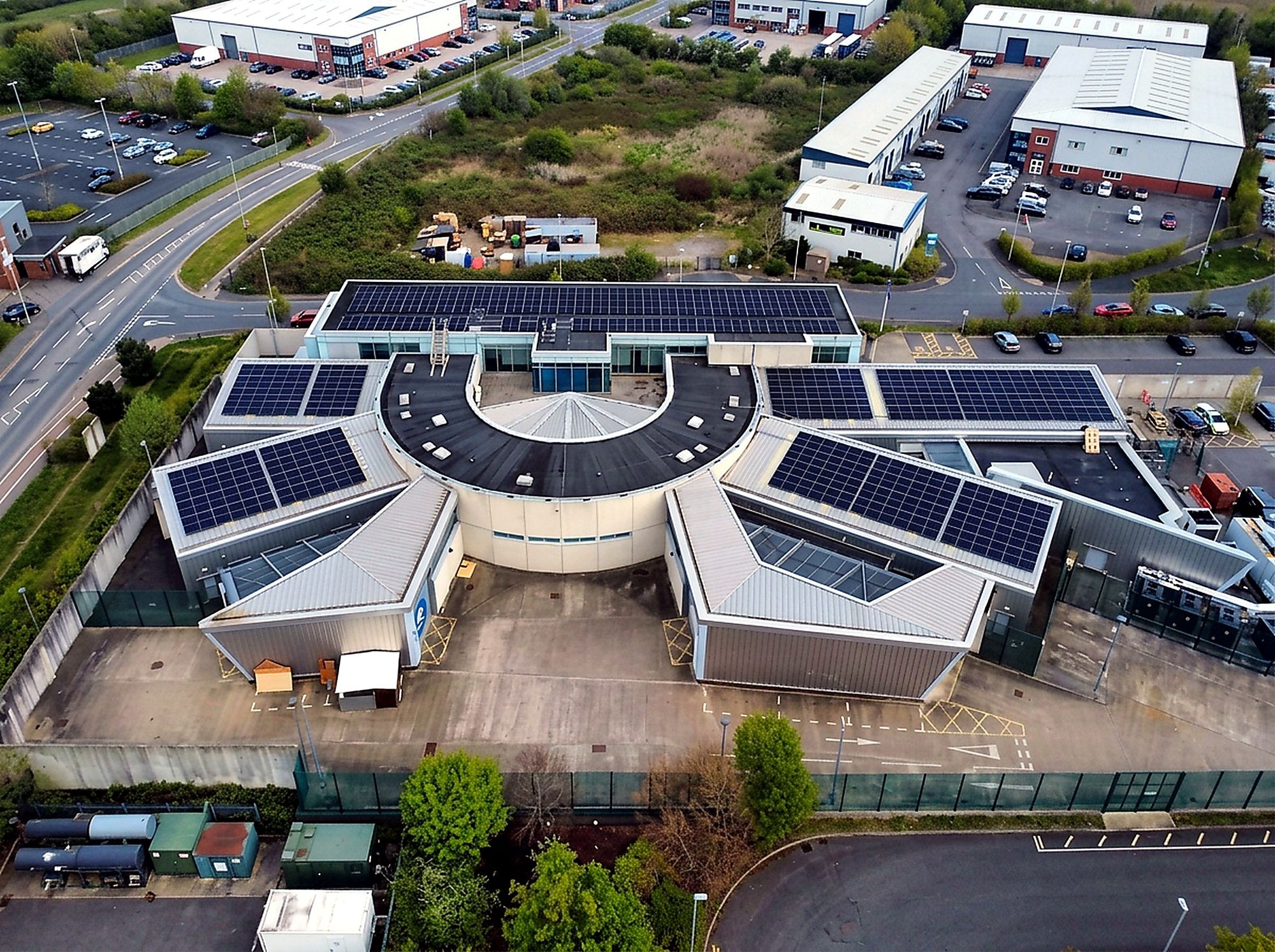
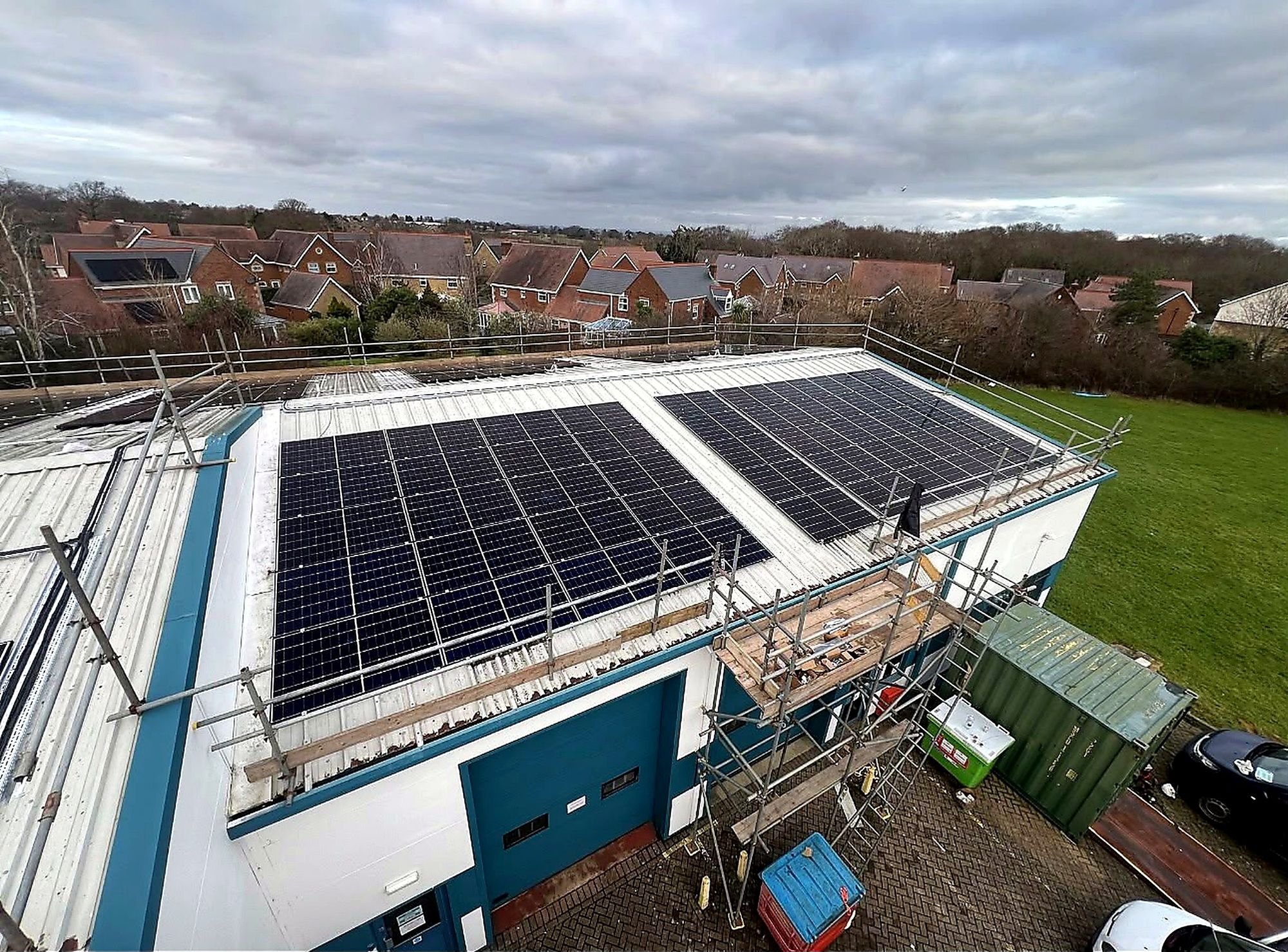
We’ve installed both SolarEdge and Tigo’s module-level rapid shutdown on our own jobs. On the Tan Sales factory roof in London — 320 kW across 770 panels — our team installed and commissioned a full SolarEdge rapid-shutdown system alongside the rooftop mounting and electrical works. And on a block of 31 flats in Watchet, Somerset, where every flat has its own 3.6 kW array, Tigo provides module-level rapid shutdown and per-flat monitoring.
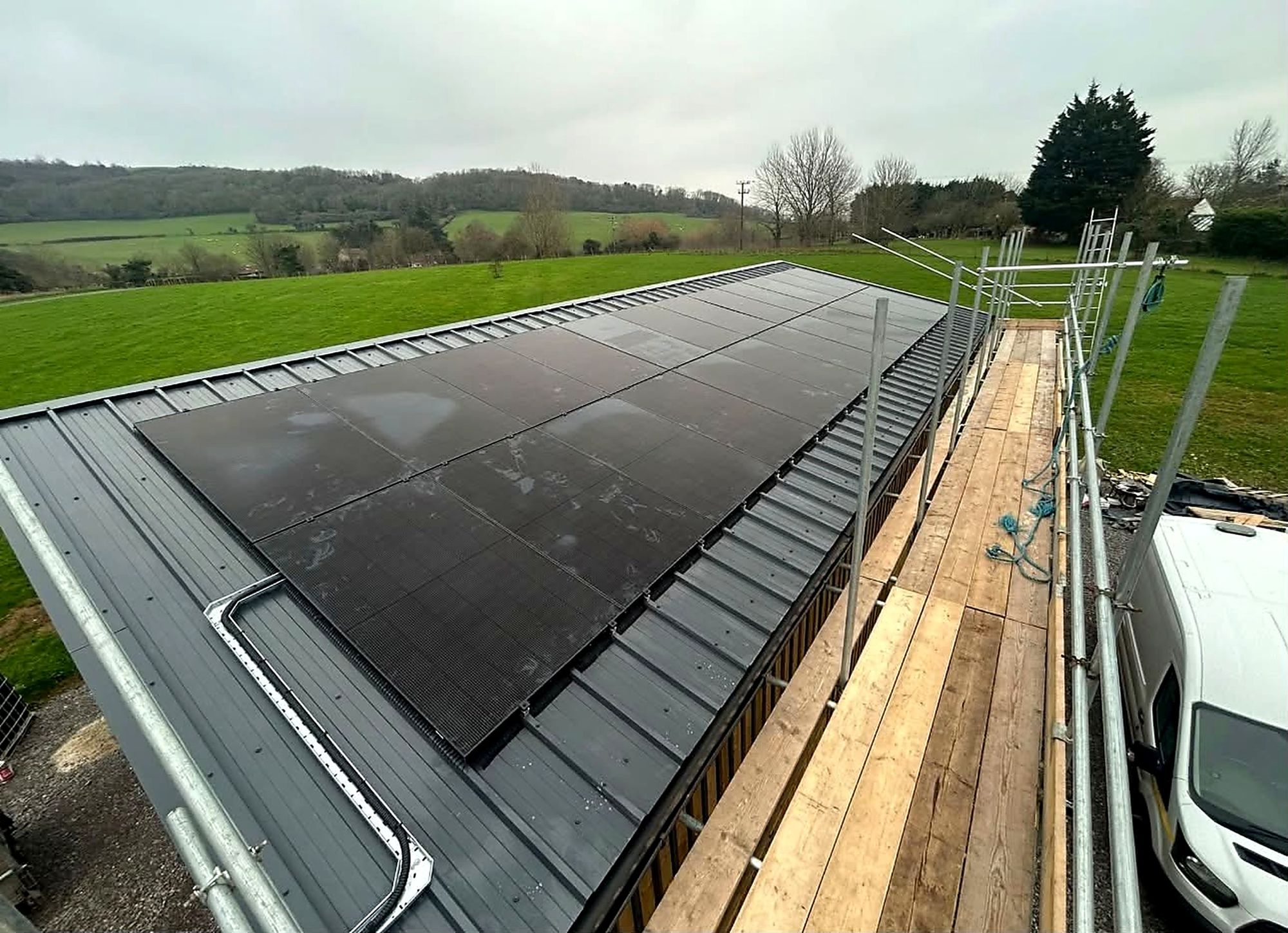
Bird protection: fit it at install
Pigeons love nesting under panels. Mesh or comb guards clipped around the array stop nesting, droppings and chewed cables, and they’re best fitted at install — retrofits cost more.
There’s a second reason to think about it early. gov.uk’s guidance on wild birds says all wild bird species, their eggs and nests are protected by law, and that it’s an offence to intentionally take, damage or destroy a wild bird’s nest while it’s being used or built. The same guidance suggests avoiding harm by timing work to avoid the breeding season and by using methods that deter birds without harming them. If birds have already moved in under an array, proofing may have to wait until the nest is no longer in use. Guards fitted before they arrive avoid the problem.
Cleaning: when it matters
The Energy Saving Trust says you don’t need to do much to keep a solar system running well, and that the main thing is keeping nearby trees trimmed to minimise shading. Where dirt does build up, though, it costs generation. Dust, pollen, lichen and bird mess can knock 5–20% off output.
A professional soft-brush clean with purified water every 1–2 years keeps panels at peak performance, and it’s included in our maintenance packages. Those packages also cover inverter health checks, thermal imaging for hotspots and fault diagnosis, which catch faults before they cost you generation. Where panel-level monitoring is fitted, it helps here too: an underperforming panel shows up on its own rather than hiding in the system total.
Getting a design that fits your roof
Our home solar installs use all-black panels designed around your roof, shading and usage, with roof design and yield modelling included. Send us your address and bills and we’ll model your roof, generation and savings at no cost. Read more about our solar panel installs and maintenance packages, or book a site survey — a one-hour visit to check the roof, loft, consumer unit and cable routes.
If your home is listed or in a conservation area, read our guide to solar panel planning permission before the design stage. Near our Weston-super-Mare base, the solar panels in Somerset page shows what a kilowatt split across east and west slopes makes there on PVGIS figures.